Solar + Battery vs Generator in Southwest Florida
An honest trade-off breakdown of solar plus battery versus a generator for hurricane backup in Southwest Florida. Many homes end up choosing a hybrid.
Last verified:
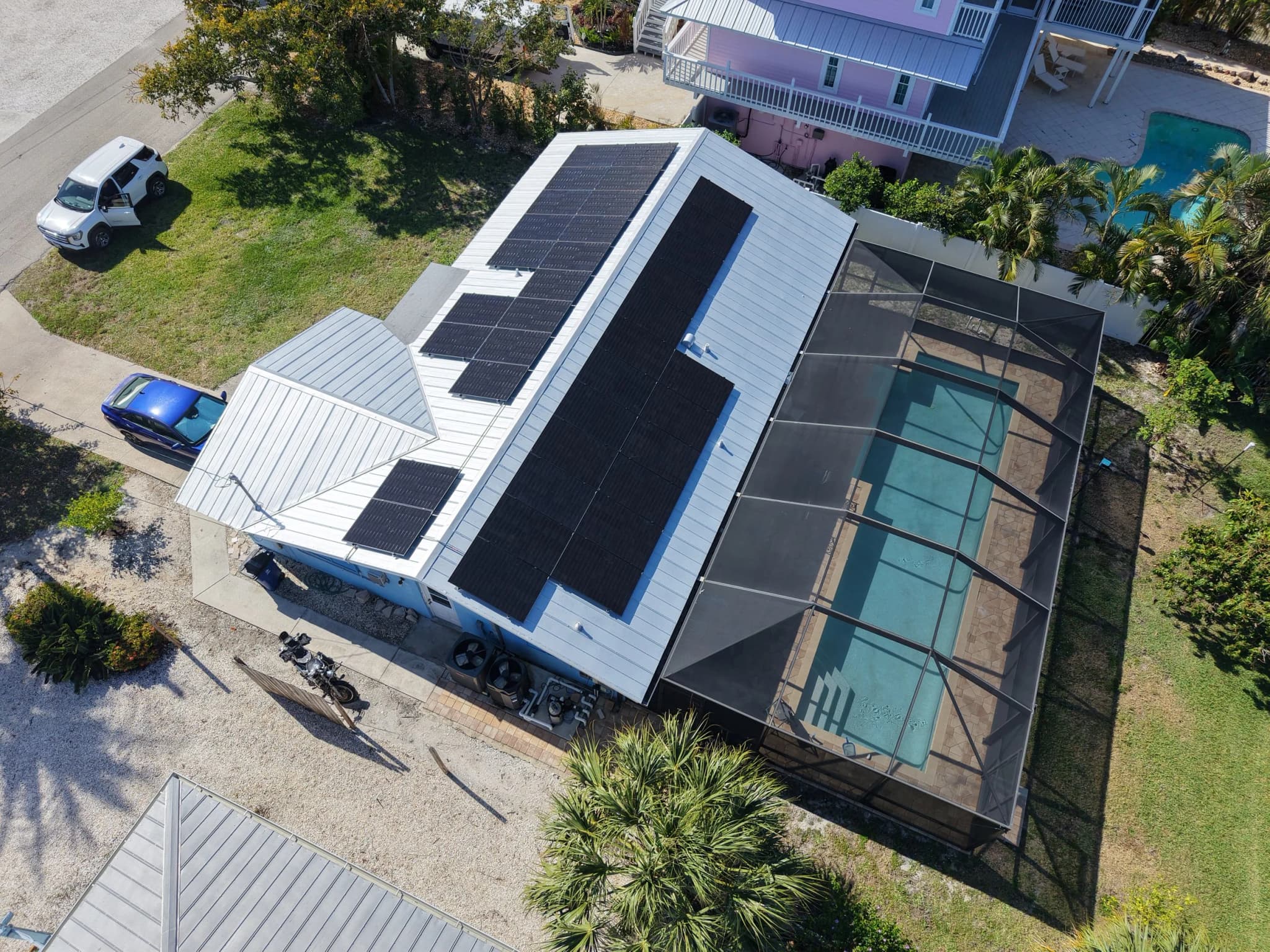
Short answer: Both work, and neither wins on every point. A generator gives you fuel-based power that runs as long as you keep feeding it, but it's noisy, needs maintenance, and needs fuel on hand. A solar-plus-battery system is silent, automatic, and recharges from the sun, but its stored energy is finite. Many Southwest Florida homes end up going hybrid and using both.
This is one of the most common questions we get before hurricane season. The honest answer is that they solve the same problem in different ways, and the right choice depends on how you weigh noise, fuel, maintenance, and cost.
What a generator does well, and where it hurts
A generator's strength is simple: as long as you have fuel, you have power. That's a real advantage during a long outage with days of clouds. The downsides are just as real. It runs loud, it needs oil changes and testing, and it burns fuel you have to store or find when every gas station in town is down. A portable unit also needs manual starting and cords, while a standby unit costs more and still needs periodic service.
What solar plus battery does well, and where it's limited
A battery kicks in automatically the instant the grid drops, runs silently, and needs no fuel. Paired with solar, it recharges every sunny day, which is what makes multi-day resilience possible. The limitation is that stored energy is finite. A heavy load like central AC drains a battery faster, and a cloudy stretch after a storm slows how fast the panels can refill it.
A grid-tied solar system without a battery shuts off during an outage for safety, even in full sun. Solar alone is not backup power. You need a battery and a backup-capable inverter for that.
A realistic look at cost and behavior
A portable generator is the cheapest way to keep a fridge and a few essentials alive, but you're managing fuel and noise. A standby generator automates that at a higher install cost. A solar-plus-battery system typically costs more upfront than a generator, but it works every day by shaving your bill, not just during outages, and there's no fuel to buy. These are general patterns, not fixed prices, and your numbers depend on your home and how much you want to back up.
Why many homes go hybrid
Plenty of Southwest Florida homeowners land in the middle. The battery handles the quiet, automatic, everyday-plus-short-outage job, and a generator sits in reserve for the rare long, cloudy outage when stored energy and slow solar recharge aren't enough. You get silence and automation most of the time, with a fuel-based backstop for the worst case.
- Generator: runs as long as you have fuel, but noisy, needs maintenance, and needs fuel on hand.
- Solar plus battery: silent, automatic, and solar-recharged, but stored energy is finite and slowed by clouds.
- Hybrid: battery for daily use and short outages, generator held back for long, cloudy events.
Questions worth asking
- How many days of backup do I realistically want, and for which appliances?
- Am I willing to store fuel and maintain a generator, or do I want hands-off backup?
- If I go solar plus battery, how fast will it recharge after a cloudy storm?
- Would a hybrid setup cover my worst-case outage without overspending?
• When this might not make sense
We'd rather lose a sale than put you in the wrong solution. Reasons we might tell you to wait or pass:
- —You only need to keep a fridge and phones alive for occasional short outages. A portable generator may be the simplest, cheapest fit.
- —Your roof gets poor sun, which undercuts the battery's ability to recharge during a multi-day outage.
- —You don't want to manage fuel or maintenance at all, which points toward battery over generator.
Sources
- Tesla Powerwall and solar — TeslaSecondary
- Enphase home energy and battery storage overview — Enphase EnergySecondary
- U.S. Department of Energy home energy resources — U.S. Department of EnergySecondary
Not sure which backup fits your home?
We'll walk through the honest trade-offs for your specific outage risk and budget, including whether a battery, a generator, or a hybrid makes the most sense.