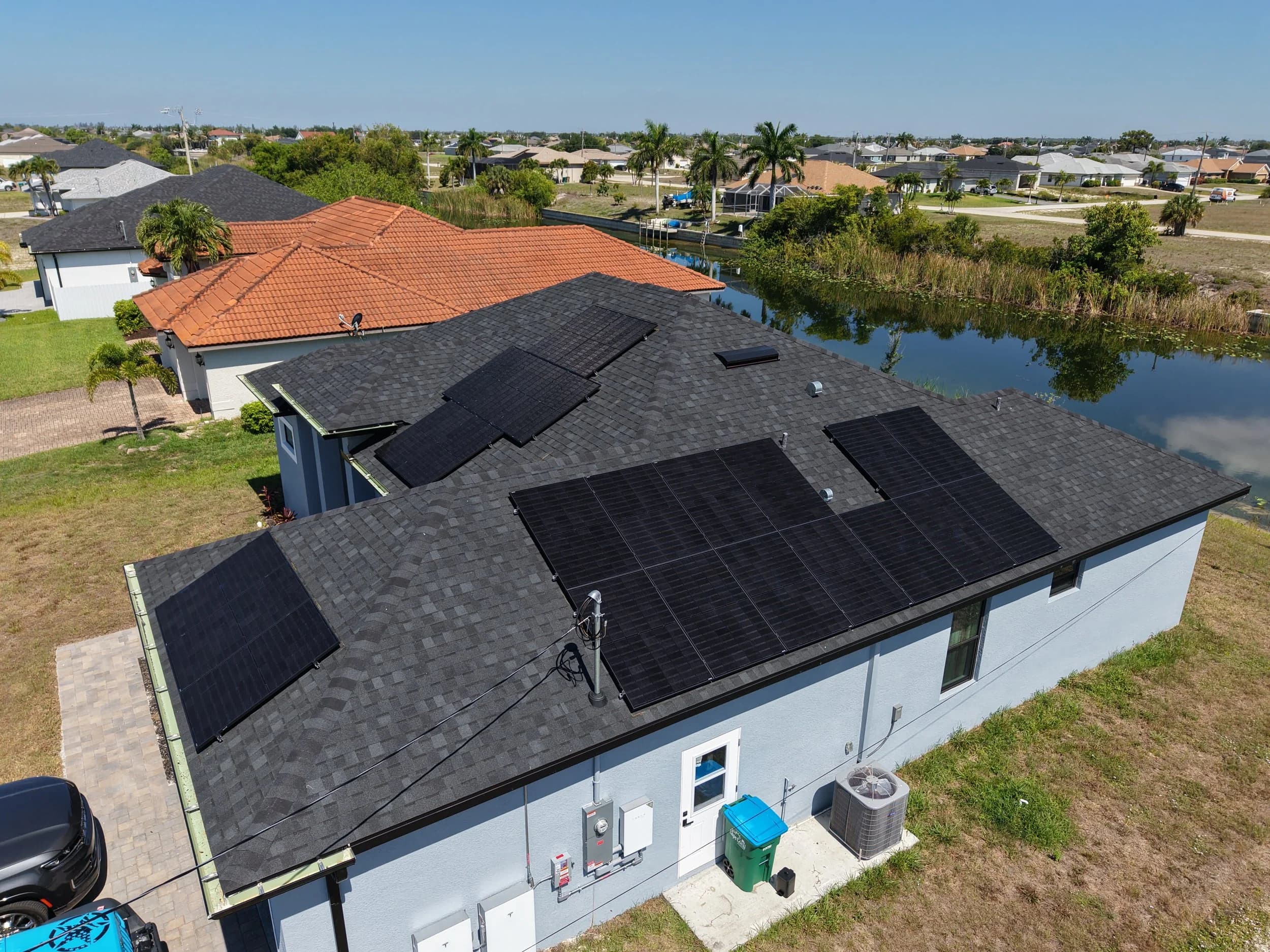
Solar shouldn't scare a buyer. Sold right, it closes the deal.
Most agents run into solar without a playbook — and a system that should be a selling point turns into a question mark. Here's how to position a home with solar honestly, answer the objections buyers raise, and keep the deal moving. We'll review any listing's system for free.
Solar is a benefit to the next owner — when it's explained
The future homeowner is the one who inherits the savings. Frame it that way and solar stops being a hurdle and starts being a feature.
Lower, more predictable bills
A buyer inherits reduced power costs while utility rates keep climbing. Framed with the numbers, that's a monthly-payment story buyers understand.
Owned solar can support value
Some studies have found buyers paid more for homes with owned solar, but results vary by market, system age, and records, and appraisers aren't required to value it. Documented production, warranties, and permits give the appraiser something to work with.
Florida's tax edge
Florida doesn't count the value a residential solar system adds when assessing property tax (Fla. Stat. 193.624), and the equipment is exempt from sales tax. Any value the system adds isn't taxed.
A newer roof, often
Many solar homes had the roof replaced at install. Pair that with the array's warranty and you're selling a roof-and-power package, not a liability.
Property-value and tax points are general information, not legal, tax, lending, or appraisal advice — confirm specifics with the appraiser, lender, and a tax professional. Value impact varies by market, system age, and documentation, and isn't guaranteed. Homeowners who buy solar now don't get a federal tax credit; it ended for systems installed after 2025.
Owned, financed, or leased — it decides everything at closing
The single most important question on a solar listing. Get the answer before you set the price, not when you're under contract.
Owned (cash or paid-off loan)
The panels are a fixture and generally convey with the deed — no third party to satisfy. Keep the install paperwork, warranties, and production records handy for the appraiser and buyer.
Owned with a loan still open
The panels convey, but the loan usually has to be paid off at closing or assumed if the lender allows. Check for a UCC filing or a PACE assessment on the tax bill, and order the payoff early.
Leased
A third party owns the equipment. At closing the contract must be resolved: the buyer qualifies and assumes it, the seller buys it out, or the balance is prepaid. Pull the transfer terms and buyout schedule before you list. (Residential PPAs aren't allowed in Florida, so third-party systems here are leases.)
The objections you hear — handled
What buyers say, and how to respond with facts instead of a shrug.
“Buyers don't like solar / it complicates the deal.”
What complicates deals is a lease nobody explained, or a production claim nobody can back up. Owned, paid-off solar rarely scares a buyer once they see the bill history. Where there's a lease, the fix is disclosure early — terms, payment, and transfer path in writing before offers, not during inspection.
“It's ugly / hurts curb appeal.”
Taste varies, but the buyer pool that cares about energy costs is large and growing, and modern all-black panels read as an upgrade to many. Lead with the facts (bill history, roof age, warranties, tax treatment) and let the buyer weigh them. Some buyers will still prefer a roof without panels, and that's their call.
“It's hard to sell a house with a solar lease.”
It's harder only when the terms are a surprise. A leased system needs the buyer to qualify and assume the agreement, or the seller to buy it out. Get the transfer requirements and the year-by-year buyout schedule from the finance company up front, and it becomes a known, manageable step instead of a closing-table crisis.
“The panels might be old, or the roof's a question.”
Fair — and worth knowing before listing. Panel and inverter age, remaining warranty, and roof condition all affect the story. That's exactly what an independent review surfaces, so you can price and position it accurately instead of guessing.
“I don't know how to explain the system to buyers.”
You shouldn't have to be a solar expert. That's what we're for — a plain-English one-pager on what the system is, what it saves, and what transfers, that you can hand any buyer or their agent.
Your independent solar desk — free for your listings
We don't install, we don't pressure your client, and nothing we do is tied to your closing, so our read is honest.
Free listing review
Owned or leased, panel/inverter age, warranty, roof, and transfer or buyout path — so you list with the facts.
A buyer one-pager
Plain-English summary of what the system is, what it saves, and what transfers — hand it to any buyer or co-agent.
Lease/buyout logistics
We help decode the finance company's transfer requirements and buyout schedule so the step doesn't stall closing.
Listing reviews and buyer one-pagers are free. We don't pay agents for referrals, and our review isn't an appraisal or an energy rating for lending.
• When we'll tell you to slow down
We'd rather lose a sale than put you in the wrong solution. Reasons we might tell you to wait or pass:
- —A leased system whose transfer terms the finance company won't put in writing
- —A buyout priced higher than the value a buyer would assign to an aging system
- —Panels on a roof near end of life, with re-roof costs unaddressed
- —A production 'guarantee' that isn't actually in the signed contract
Have a listing with solar? Let's make it an asset.
Send us the address or the solar paperwork and we'll give you an honest, independent read — free — plus a buyer-ready one-pager. No pressure on you or your client.
We compare the numbers. You decide. If solar isn't right for your property, we'll say so.