What Happens to Solar When the Grid Goes Down?
Standard grid-tied solar shuts off during an outage, even in full sun. It is a safety requirement called anti-islanding. To keep power, you need a battery or islanding-capable equipment.
Last verified:
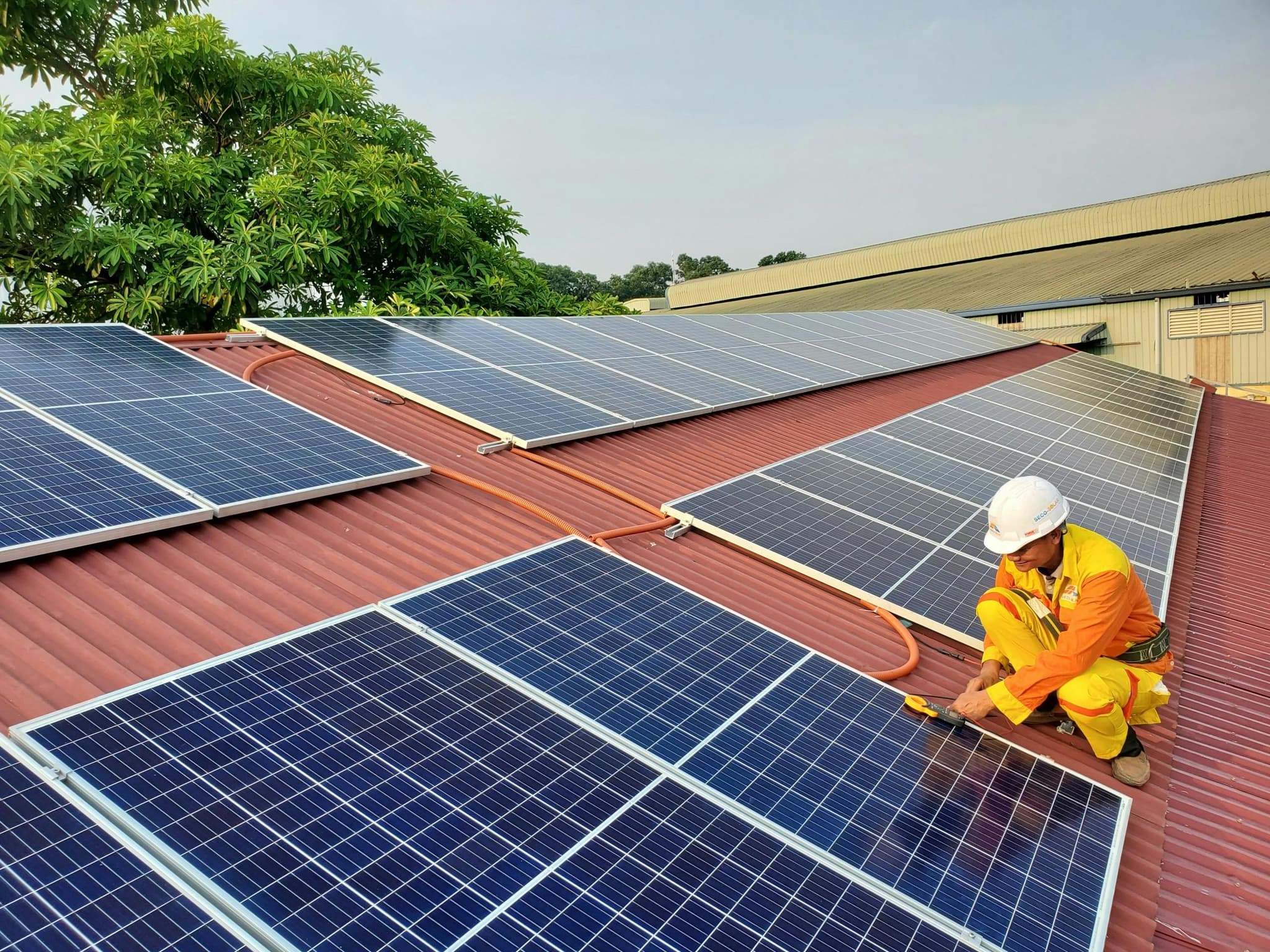
Short answer: This surprises almost everyone: standard grid-tied solar shuts off during a power outage, even in bright sun. It is a mandatory safety feature called anti-islanding that stops your panels from sending power onto lines that utility crews may be repairing. To actually keep power when the grid is down, you need a battery or an islanding-capable system. Solar panels alone will not do it.
If you take one thing from this article, take this: buying solar does not automatically mean you have power in a blackout. Most homeowners assume the opposite, and it is the single biggest misunderstanding in the whole industry. Let's clear it up so you buy the right system for what you actually want.
Why your solar shuts off in an outage
When the grid goes down, utility workers may be out repairing the very lines that connect to your house. If your solar kept pushing power onto those lines, it could electrocute them. So grid-tied inverters are required to detect the outage and shut down instantly. This safety rule is called anti-islanding, and it applies to standard grid-tied systems everywhere. It is not a defect. It is doing exactly what it is designed to do.
Grid-tied solar without a battery cannot power your home during an outage. Anti-islanding is a safety requirement, not a malfunction. To keep the lights on, you need a battery or an islanding-capable system.
What actually keeps your power on
To have power during an outage, you need equipment that can safely disconnect from the grid and run your home as its own little island. In practice that means a home battery paired with a backup-capable inverter. The system senses the outage, isolates your house from the grid, and then lets your solar and battery power your circuits without ever back-feeding the lines. That isolation is what makes it safe and what makes it work.
How a battery-backed system behaves
During a daytime outage, your panels power the home and recharge the battery at the same time. At night, the battery carries the load alone, and the next morning the sun refills it. That daily cycle is what stretches backup from hours into days. But be realistic about the load: air conditioning is heavy and draws a big surge every time the compressor starts, and no battery runs a whole house indefinitely. Runtime depends on your battery size, your actual load, and how much sun you get.
A realistic example
Two neighbors both have solar. The storm hits and the grid drops. The first neighbor has a standard grid-tied system with no battery, so at noon in full sun the house is dark, because anti-islanding shut the panels off. The second neighbor has a battery and a backup-capable inverter, so the fridge, some lights, and fans stay on, and the panels recharge the battery each day the sun returns. Same panels on both roofs. The battery is the entire difference.
The honest trade-offs
- Solar alone is cheaper but gives you zero outage protection. If backup is your goal, that gap matters.
- A battery adds cost, but it is the only way solar keeps your power on when the grid is down.
- You do not have to back up the whole house. Many homeowners back up essentials like a fridge, outlets, and a few lights to keep the battery smaller and cheaper.
- Air conditioning is a heavy load with a startup surge, so whole-home AC backup calls for more battery capacity than essentials-only.
Questions worth asking
- Is the system you are quoting me able to power my home during an outage, or will it shut off?
- If I want backup, what battery and inverter do I need, and which circuits stay powered?
- How long will the battery run my essentials overnight, and how fast does solar recharge it?
- Can I add a battery later, or does it need to be part of the original design?
• When this might not make sense
We'd rather lose a sale than put you in the wrong solution. Reasons we might tell you to wait or pass:
- —Your only goal is a lower electric bill and you do not care about outages. A grid-tied system without a battery may be all you need.
- —Your budget cannot stretch to a battery right now, in which case be clear-eyed that solar alone will not keep the lights on.
- —You rarely lose power and a small portable generator for the fridge would cover your needs more cheaply.
Sources
- Homeowner's guide to going solar and solar-plus-storage basics — U.S. Department of EnergySecondary
- Solar-plus-storage and grid-interaction research — National Renewable Energy LaboratorySecondary
- Home energy systems and battery backup overview — Enphase EnergySecondary
- Powerwall and solar backup overview — TeslaSecondary
Want solar that actually keeps the lights on?
We will size a battery to the loads you care about and tell you honestly what it will and will not run during an outage, so you are never surprised when the grid goes down.